
FIELD NOTES
Field notes from a decade pressing fallen trees in remote forests. Writing has become part of the practice — a way to slow down and step out of a practical mindset. These are the stories the forests left behind.
THE UNDERSTORY

Small facts from the forest floor, an offshoot from regular entries.
The understory is a dive into forest related things, science, relationships, anything that piques my interest.
Have a question you would like to ask? send through here
THE GROUP SHOW
Wombat State Forest, Ballarat VIC 2014
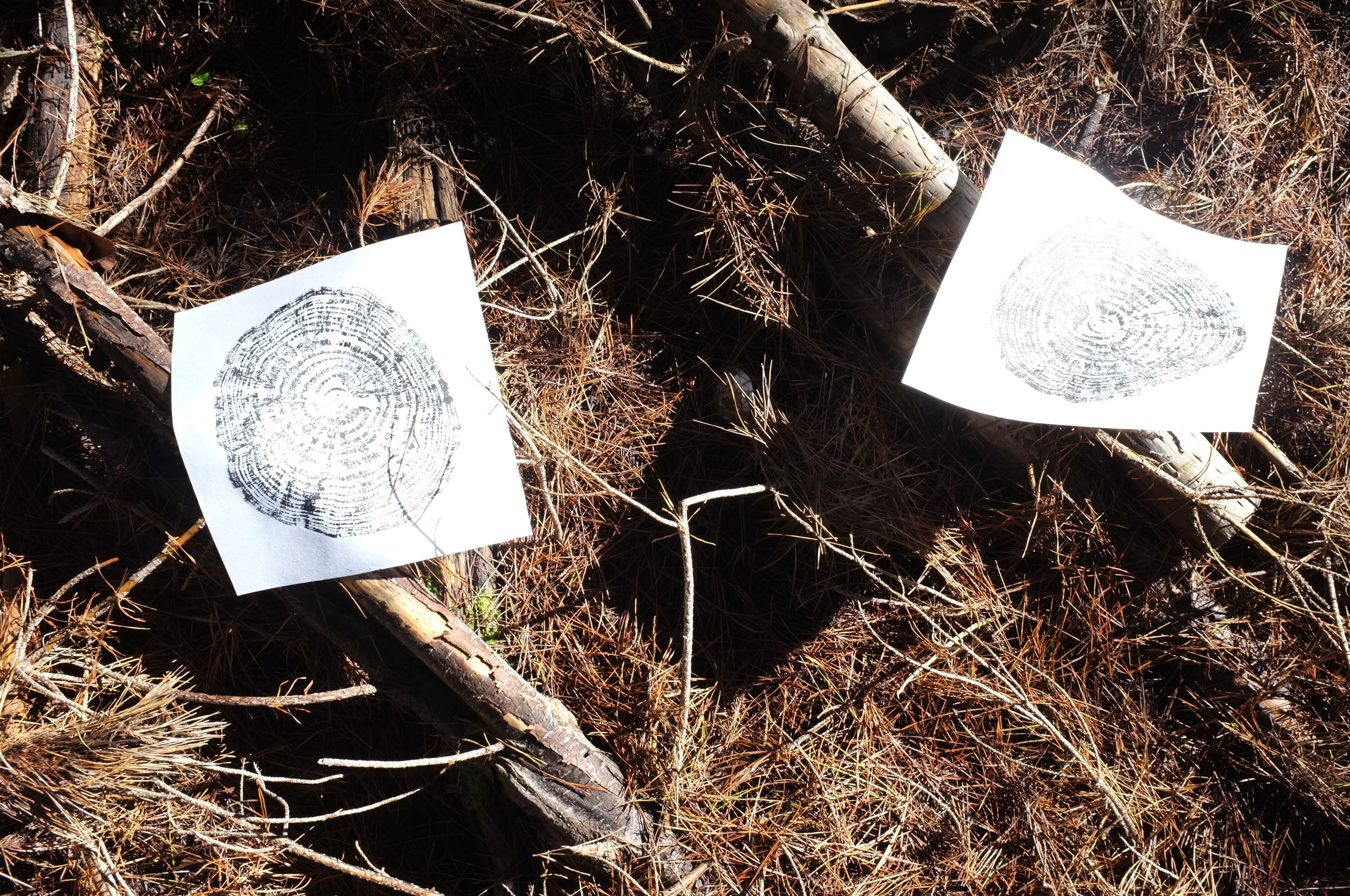
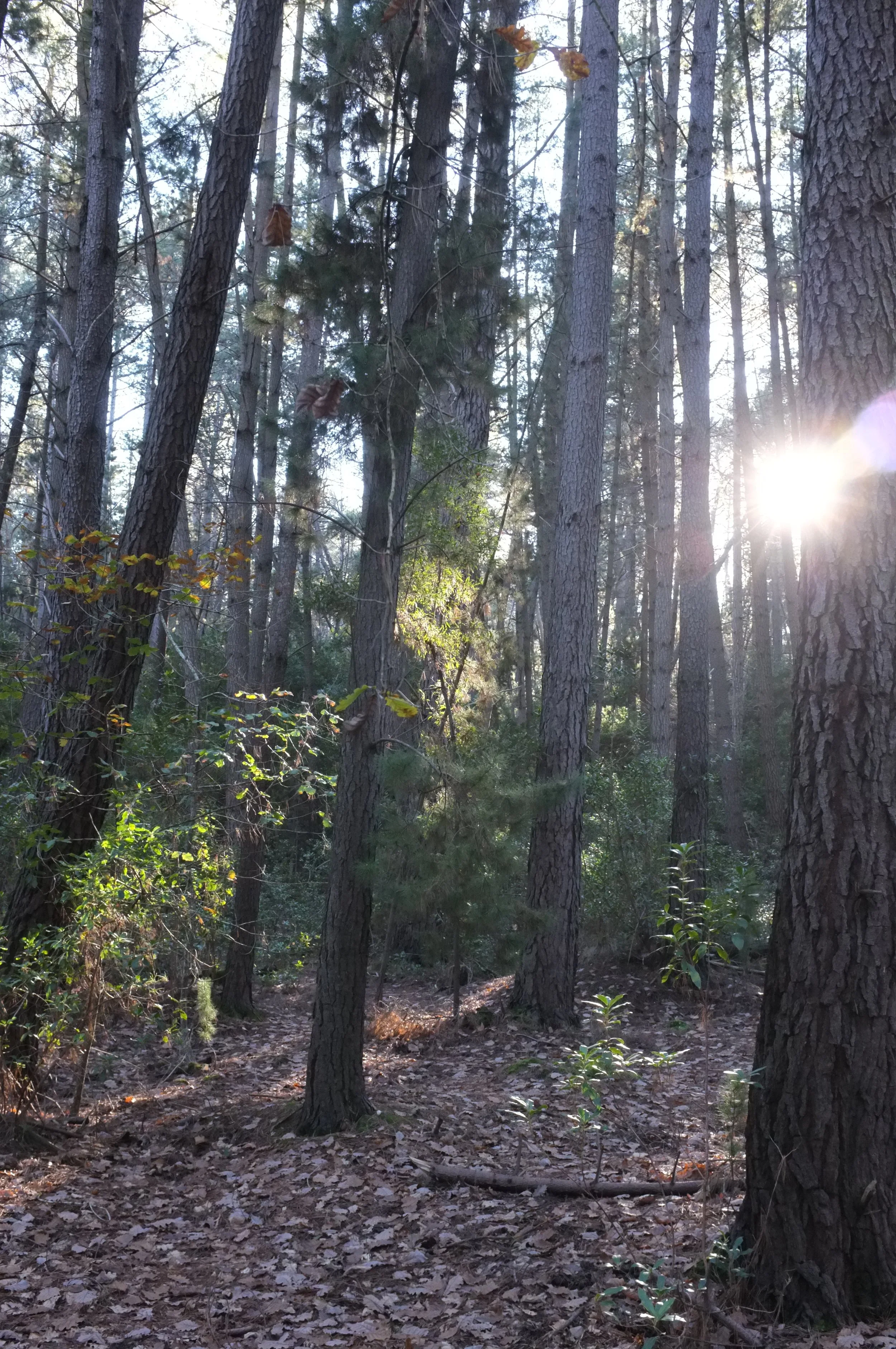
The previous autumn we went northwest to a forest, searching and learning how to forage.
Searching for fallen trees is a lot like foraging — you have to read the landscape for subtle changes. A slightly larger opening in the canopy. A vacant space in the distance. A human disturbance or track that can ultimately lead to a stump. This part of the process can take forever. There is a lot of forest out there.
It was enchanting. This particular forest was more like an arboretum, initially planted by John La Gerche in the late 1800s — a pioneer forester who planted over 100,000 seedlings personally. Oaks, planes, poplars, eucalypts, and various other species.
Being exposed to so many varieties in such close proximity was something else entirely. Broadleaf deciduous trees create a gorgeous atmosphere.
This was where I camped.
The plantations began where the arboretum ended. Not far from there were young rows of pines, some cut, some standing.
I had been in deep contemplation about this for a while. I wanted to name them all — the trees I would print. The struggle was that generalising them by species didn't align with my beliefs. Here we have an entire globe where once a tree stood, or will stand, as an individual. They deserve more than a collective name.
Where they stand. The coordinates. With time and place, even if another tree takes its place, they won't have the same growth rings. Their carbon dating will be different. Their life experiences will tell a different story.
So while I was walking through different sections of the plantation I was watching my phone, noticing on my maps the coordinates changing degrees ever so slightly. This for me was exhilarating. The concept was taking shape. The desired outcome was working.
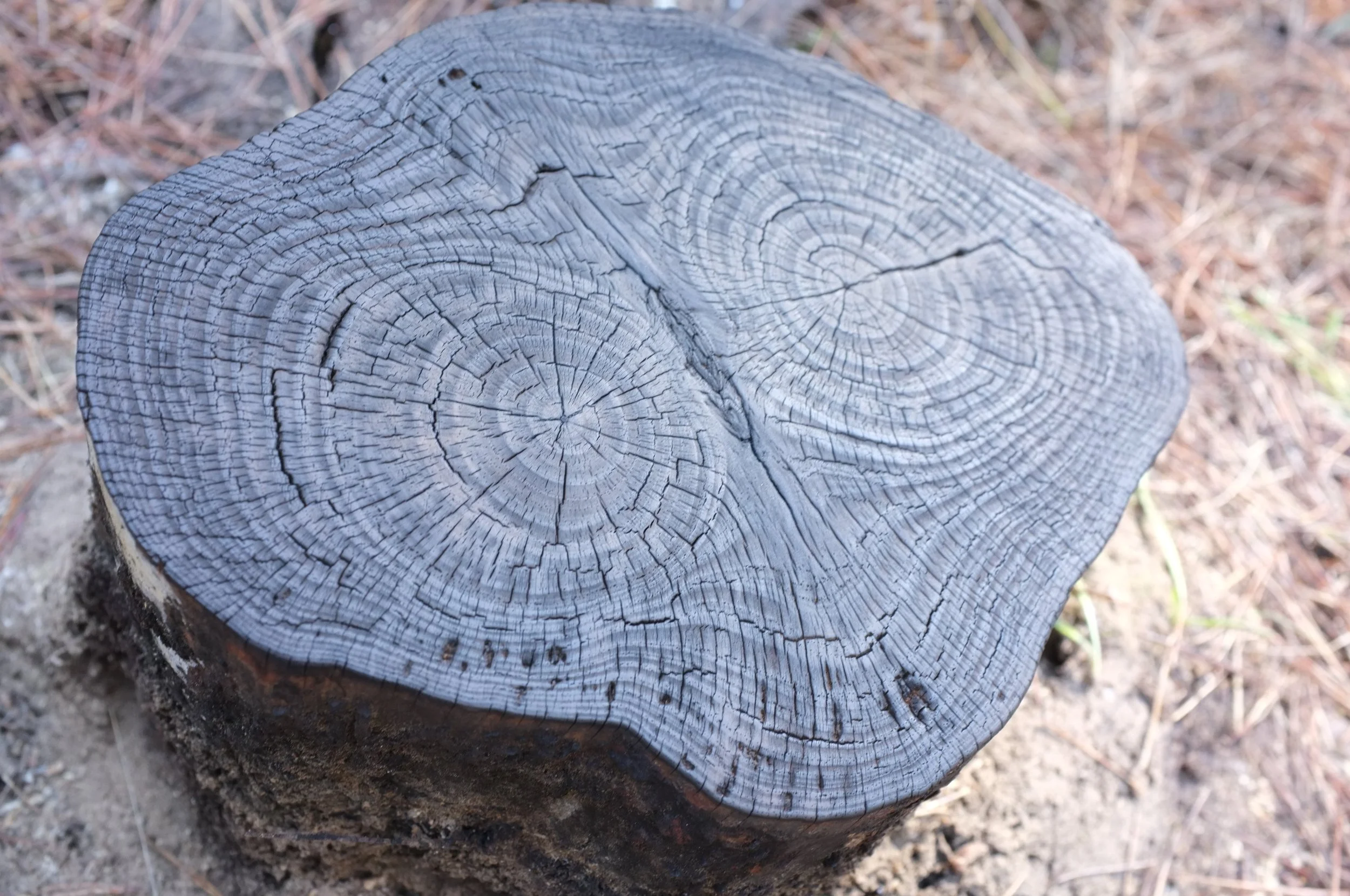
Capturing the lives of trees in different areas, with different growth patterns, different locations — showing their uniqueness.
The rush of that realisation will forever stay with me.
I created five small works. Really small. Each tree would have been under twenty years of age before harvest.
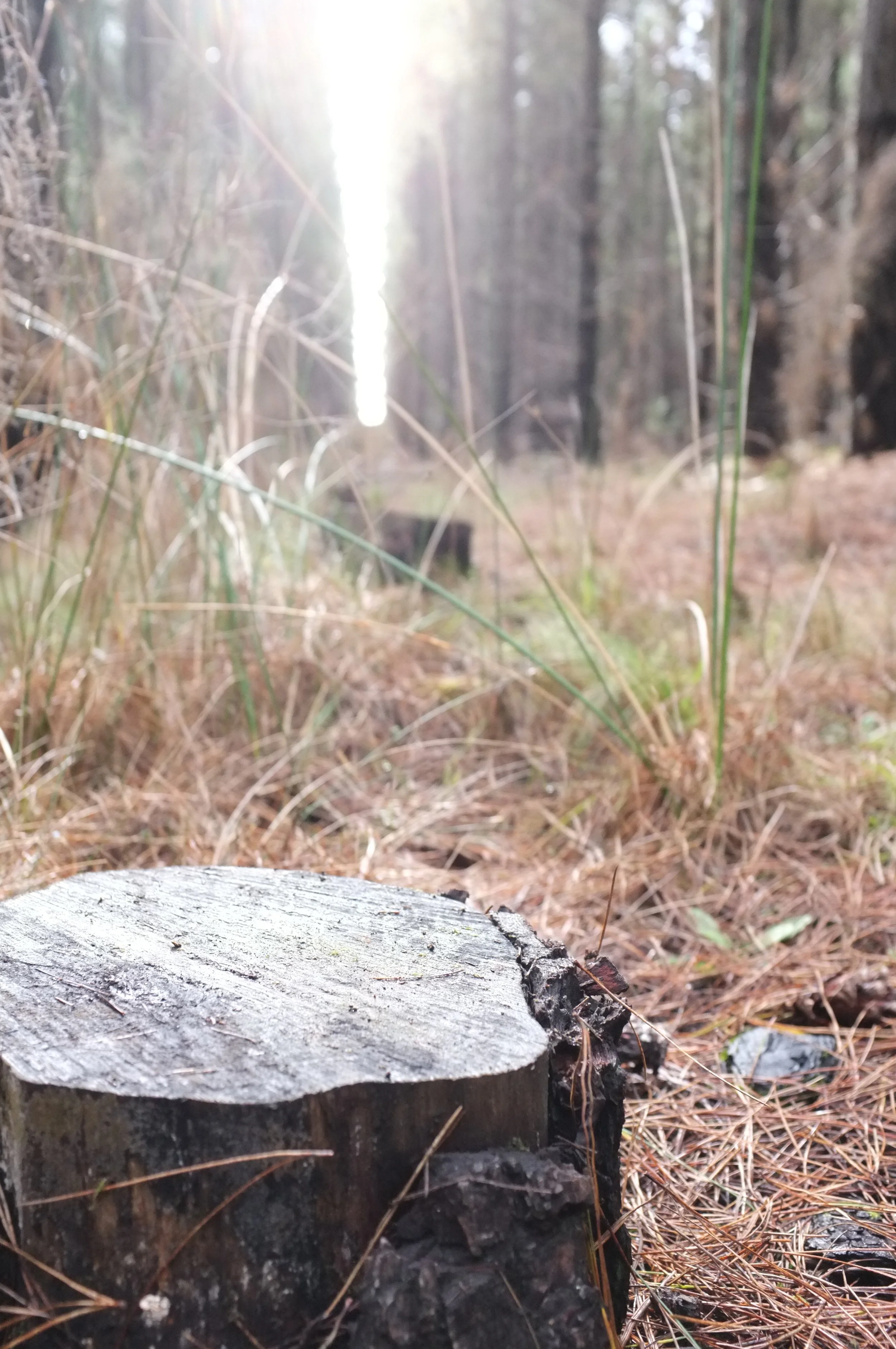
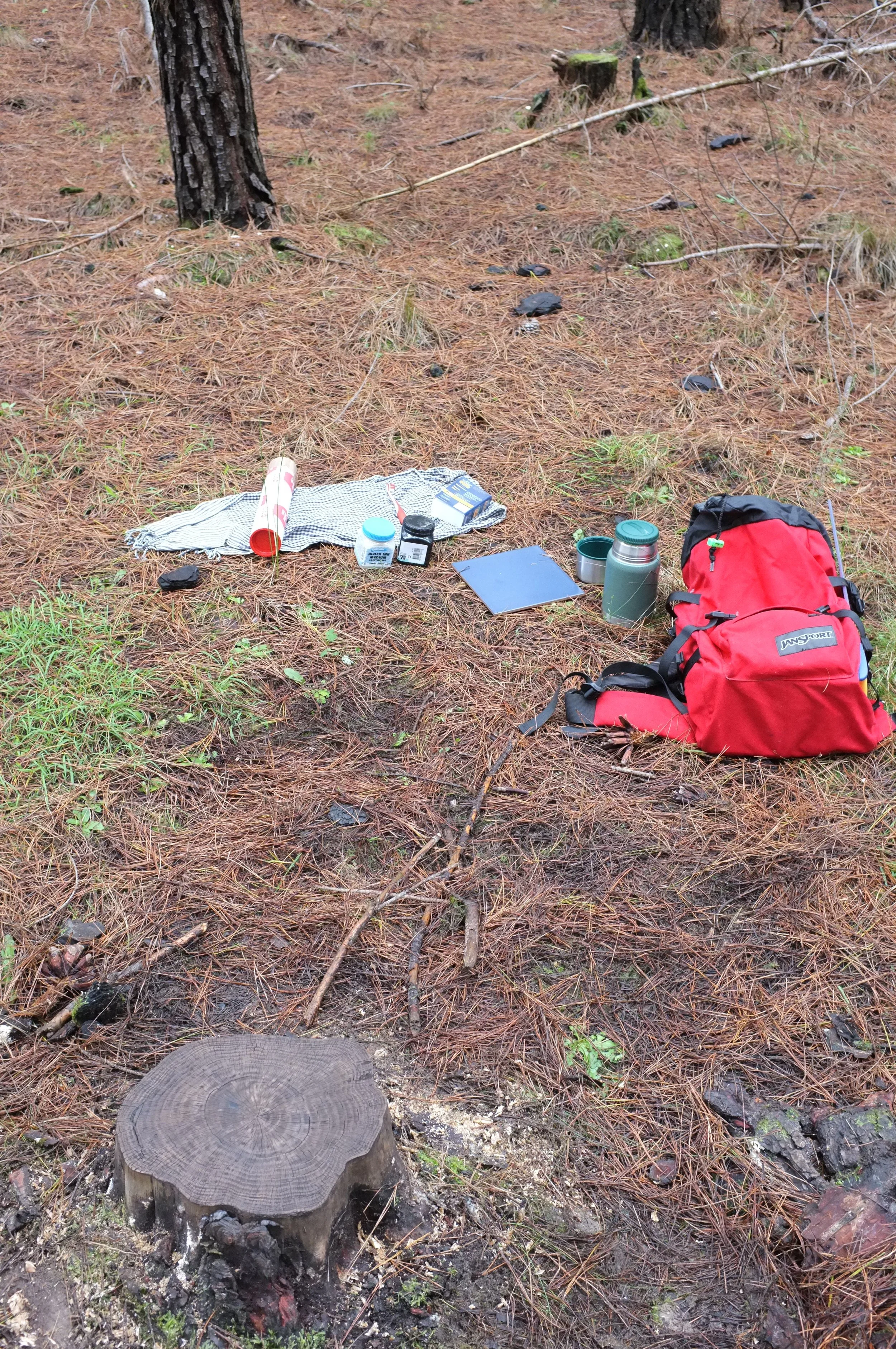
This was my first real taste of the practice in the field. Hours outside in the cold, using hand tools, exposed to the elements. I noticed the difficulties of simple things — a heavy breeze, a light drizzle, even too much sun. They all have an effect on the ink, the paper, the space.
The show was two weeks away. I screenshotted my maps and a photo of each tree for reference. When I got home and the works had dried, I signed and marked each one with their coordinates — like a field note entry. Not a title. Just a reference. I've always loved the visual documentation of nature. This made sense.
I framed them as best I could. Simple frames, nothing precious — the works weren't ready for that yet and neither was I.
The self-doubt crept in right about here. As the opening date grew closer, so did my fears. I'd never really put myself out there in this way. I felt exposed. Fraudulent. But then the reframe came — I wasn't an artist, I was a translator, for the forest.
This eased everything. It wasn't for me. It was for them. I was just the conduit.
Opening night came around. It was busy. None sold. I didn't care and I didn't expect to either. I was glad it happened and glad it was over. Time to go back to the maps, search for new destinations, look at my pack and plan the next trip.
I remember leaving that forest. I noticed a stump. It was big. Too big? I'd have to find out.
THE FIRST TREE
Surf Coast Victoria, AUS 2014
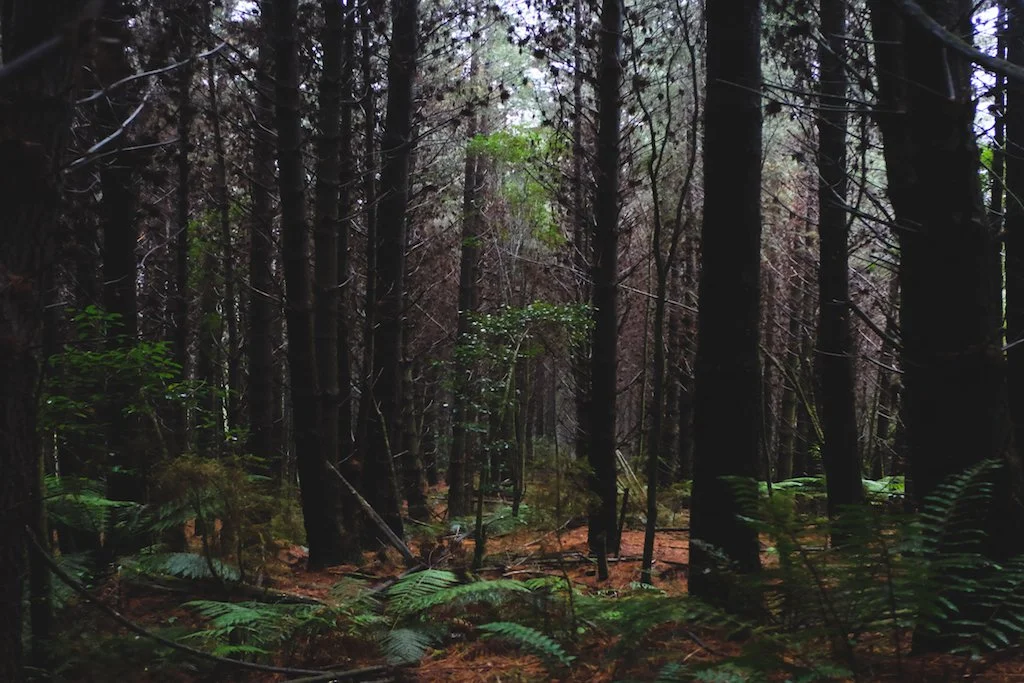
The philosophy was simple. Get out in nature, take your tools, find a tree, make a work.
Living in Victoria, no matter which direction you head, you find an interesting landscape. I headed south west toward the surf coast, toward the Otway ranges, with no plan beyond feeling it out. When something stands out, take notice.
I came over a crest into a large clearing and stopped.
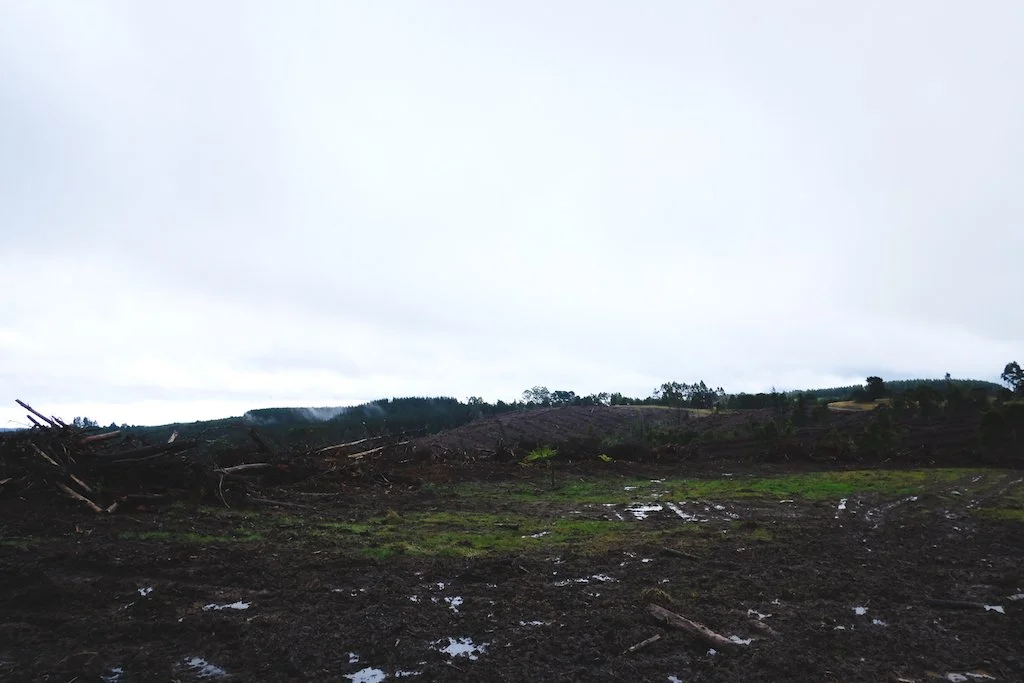
It was so strange — to know something was once there but is no longer. I could almost see the forest, feel it. Instead, a muddy battlefield. Cleared trees, piles of logs, burn piles, forestry signs.
It looked like a war zone. It felt like a war zone.
Over the next hill I could see a neat and dense pine forest, probably destined for the same fate.
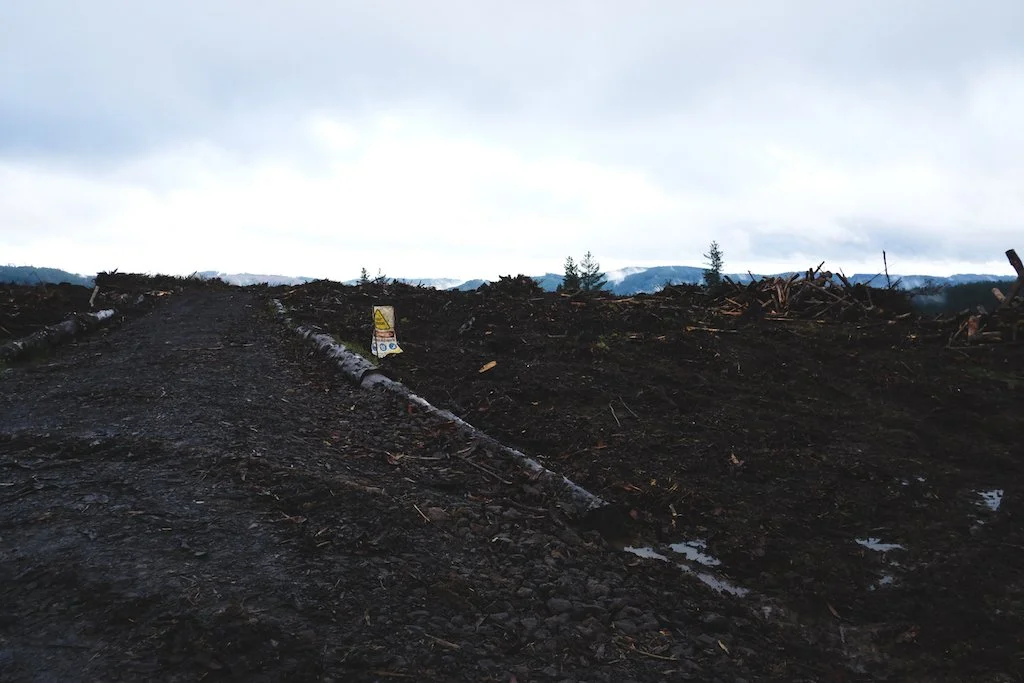
I sat for a while, observing. Asking myself the questions I hadn't fully answered yet. Why am I doing this? Is this right? Is this even it? I didn't have an idea so much as a feeling — and sitting in that clearing, surrounded by what had been taken, the feeling got louder not quieter.
The mud was thick, but willing. Sometimes mud holds you down, steals your footwear. But this mud didn't care that I was there. That was the sign.
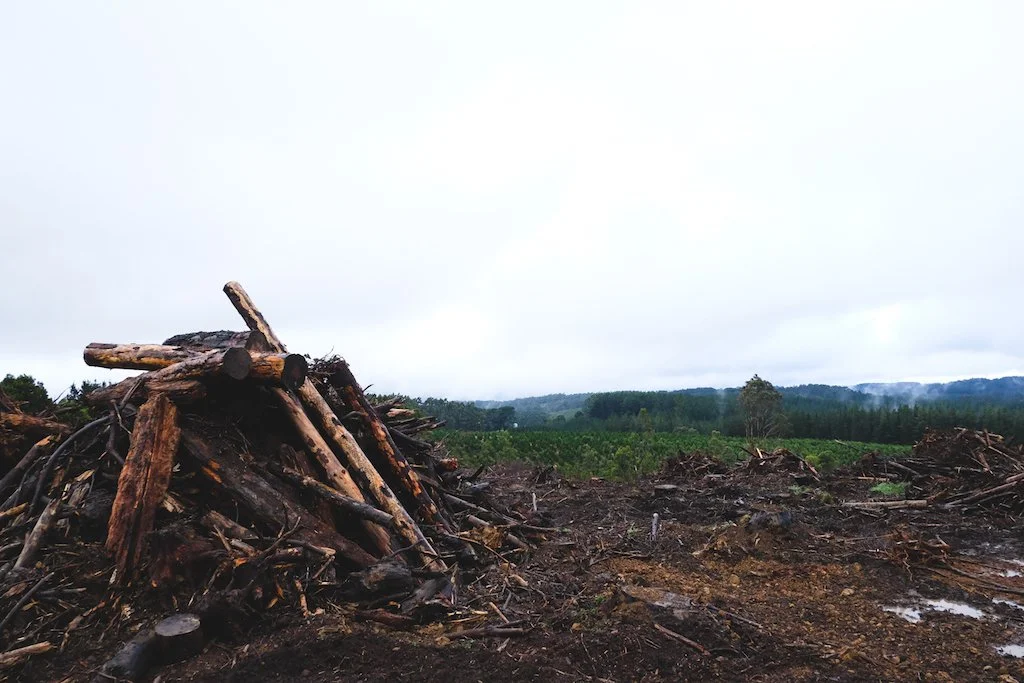
I followed an intuitive thread down into the valley, using stumps as stepping stones as I made my way through. I didn't even register that these could be the trees to work on — I was drawn to something further in. Then it appeared.
The most interesting of shapes. A twisted stump, buried among others, but different. This one called out.
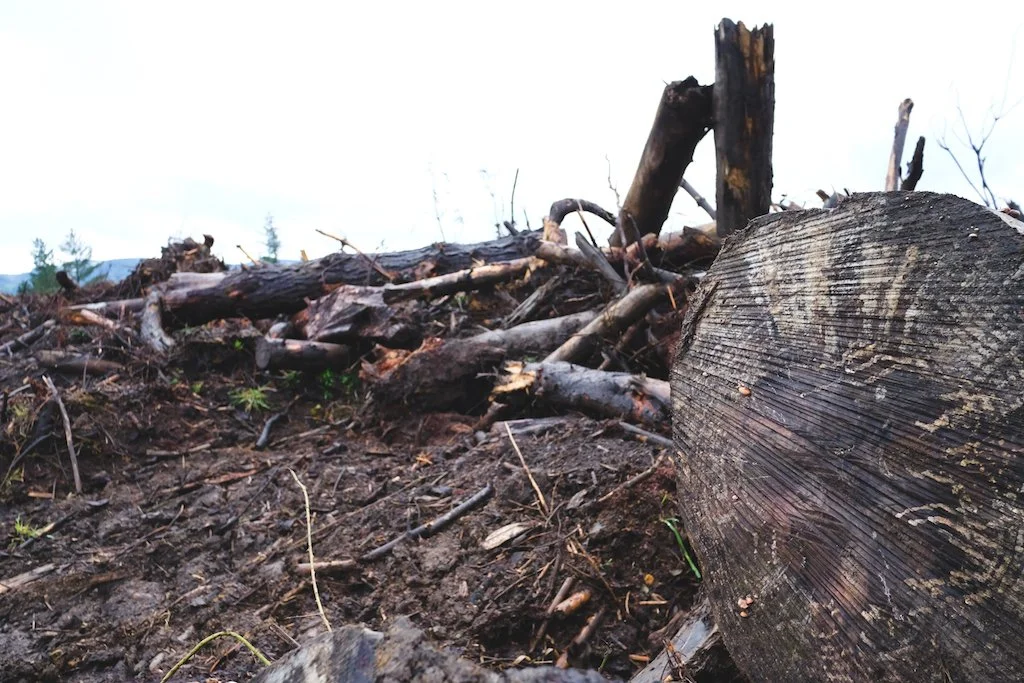
The light was leaving the sky, grey and overcast, the earth protected by quilted clouds. I lifted the slippery stump over my head, found my balance, and made my way back uphill — holding my breath with every footstep, trying not to slip or slip a disc.
This wasn't part of the plan. The vision had been to work on the tree in place, out in the forest. But this tree chose me. It wanted to be remembered.
I set up camp at the car, stump in the boot, a long night ahead. When the light left completely I decided to head home — early, but excited. I had the stump.
I spent the next couple of days working on it. Sanding, planing, burning, brushing, grooving. The first ink wasn't right. I found a printmaker in Fitzroy who pointed me toward an oil-based ink — something that would give me time to work and wouldn't smudge. I went back and started again.
I loaded the stump with ink, again and again, rolling over every inch, ensuring I captured as much detail as possible. I remember being over the paper with my hands and fingers, feeling the dampness pulling through. I could see the silhouette from the back of the sheet. I was close. With every pass of my thumb, a little more detail appeared. I was nervous. Excited. I couldn't be sure, but I thought it was going to work.
I slowly but firmly peeled the paper up and off the stump.
The weight of this tree's life hung on the paper — immortalised, remembered, seen.
Direct translation of its life. It worked.
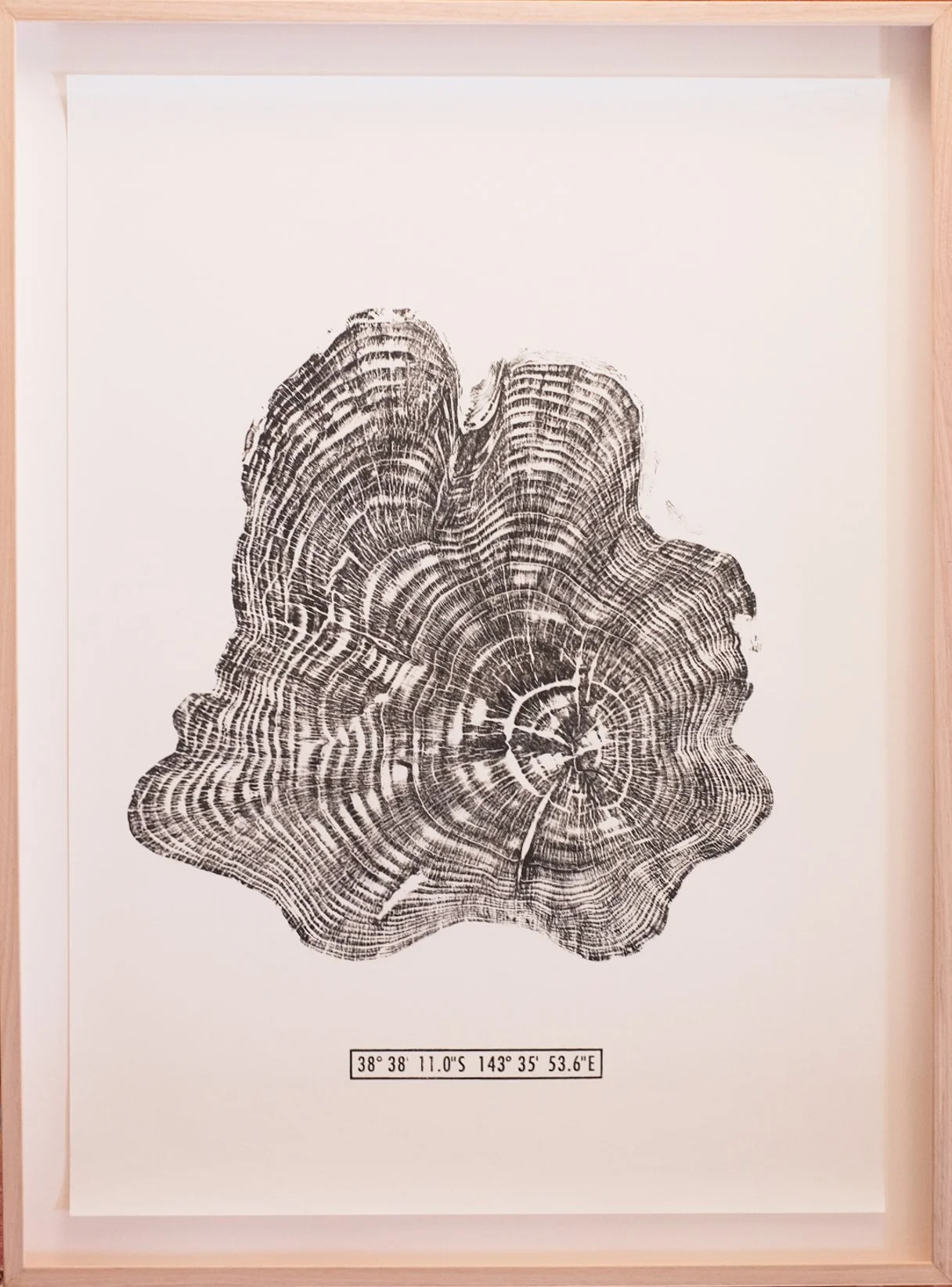
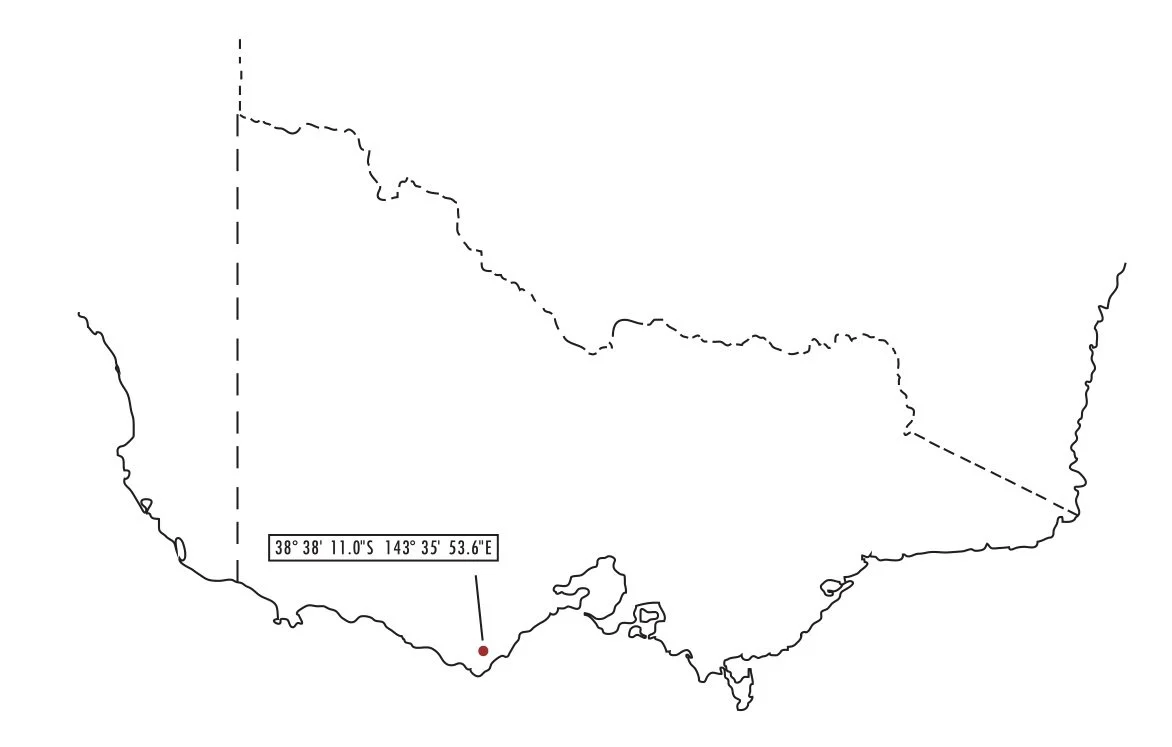
38°38′11.0″S, 143°35′53.6″E